
Trust Is Built in Experience, Not Messaging
Welcome to the Health Marketing Collective, where strong leadership meets marketing excellence.
In today's episode, we delve into the barriers to technology adoption among older, higher-risk populations and how innovative companies are reframing the narrative around “tech hesitancy” in healthcare. Joining us is Harry DiFrancesco, CEO and co-founder of Carda Health, who brings real-world insights from building virtual cardiac and pulmonary rehab programs designed to meet patients where they are, especially those traditionally underserved by hospital-based care.
After caring for his own parents and seeing firsthand the challenges of accessing rehabilitation in rural America, Harry founded Carda Health with a personal mission: to make advanced, supportive care available at home for those who need it most. In a landscape awash in new technology and AI-driven solutions, Harry DiFrancesco argues that trust more than tools or tactics is the critical factor for patient engagement and health outcomes.
In this conversation, Sara and Harry unpack common misconceptions about seniors and technology, discuss the real sources of adoption friction (it’s not what most people think), and share best practices for designing tech-enabled healthcare that earns genuine trust. They also explore the right and wrong ways to leverage AI in healthcare, emphasizing that technology must enhance value and human connection to truly succeed.
Thank you for joining the Health Marketing Collective, where we explore the leadership and marketing strategies shaping the future of healthcare.
Key Takeaways:
Challenging the "Tech Hesitant Senior" Narrative
Harry DiFrancesco pushes back against the widespread assumption that older adults simply can’t or won’t use technology. Instead, he highlights that tens of thousands of seniors engage daily with Carda Health’s virtual rehab solutions, proving it’s a matter of design and support not innate reluctance. The true barrier is that most tech is built for younger users, not that older users lack the capability or willingness.
Designing With Empathy and Intentionality
Success with older populations requires adapting design choices to meet their needs: larger fonts, simple navigation, and reducing unnecessary complexity (like having apps pre-downloaded and minimizing device setup). Harry DiFrancesco emphasizes listening to end-users, removing friction, and maintaining a deeply empathetic mindset leveraging staff who are trained to step in and help when human intervention is needed to overcome anxiety or confusion.
Trust Is Earned Through Value and Transparency
Trust especially in healthcare hinges on communicating clear, relatable value and maintaining transparency, particularly around costs. Carda Health works to advocate for fee waivers, proactively communicates about copays, and offers price estimates upfront, knowing that unexpected bills quickly erode confidence and engagement. Brands must ensure their users feel informed and see immediate benefits from participation.
AI as an Efficiency Layer (Not a Replacement for Care)
Harry shares a realistic perspective on AI in health: it should support clinicians, improve efficiency, and free up time for meaningful patient relationships not replace human care. He critiques Silicon Valley’s fear-driven AI messaging, suggesting it breeds mistrust. At Carda Health, AI is used for device monitoring, automating coverage decisions, and relieving clinicians of administrative burdens, enabling them to focus on patient connection.
A “Locus of Control” Mindset Drives Adoption
Rather than blaming patients for non-adoption, Harry advocates for companies to internalize what they can change about their own products and processes to remove barriers. The fundamental adoption driver isn’t age or skepticism; it's whether the product delivers more value than friction. Companies that actively seek out, understand, and refine the factors contributing to user anxiety or hesitation can win trust and long-term engagement.
Thank you for being part of the Health Marketing Collective, where strong leadership meets marketing excellence. The future of healthcare depends on it.
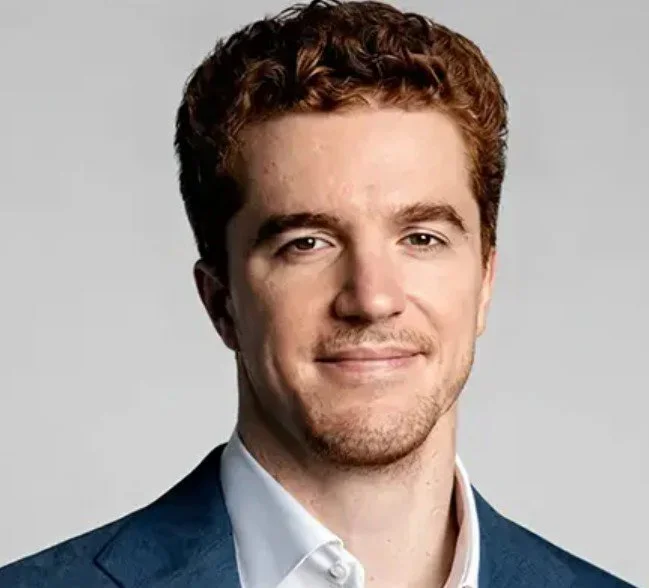
About Harry DiFrancesco
Harry DiFrancesco is the CEO and Co-Founder of Carda Health, a leading virtual care company specializing in at-home rehabilitation for heart and lung disease. Inspired by his experience as a caregiver for his parents, Harry founded Carda in 2020 to democratize access to life-saving care through an AI-driven, patient-centered platform. A former educator and Teach For America alumnus, Harry holds a degree from Cornell University and an MBA from The Wharton School. Outside of transforming healthcare systems, he is an avid ultramarathoner and mountaineer.
-
Sara Payne [00:00:10]: Welcome back to the Health Marketing Collective, where strong leadership meets marketing excellence. I'm your host, Sarah Payne. Most healthcare innovations don't fail because the strategy is wrong. They fail because patients don't trust what's being built. And nowhere is that more true than with older, higher risk populations, the people who arguably stand to benefit from it the most as care moves beyond the hospital and into the home. So what does it take to earn trust in that environment? And are we even framing the problem correctly when we talk about tech hesitant patients? Today we're unpacking that topic with Harry DeFrancesco, CEO and co founder of Carta Health, a virtual care company that's rethinking how cardiac and pulmonary rehab can gets delivered and who it actually reaches. Harry started Carta after caring for his own parents and brings a deeply personal lens to one of the hardest challenges in healthcare today. Harry, welcome to the show. Harry DiFrancesco [00:01:08]: Thank you. Glad to be here. Sara Payne [00:01:10]: Yeah. I'm excited to have you here to dig into this topic. I've heard you say that trust is harder to earn in health care today, especially in a world where tools like ChatGPT exist. Tell me more about your perspective on this. Harry DiFrancesco [00:01:26]: Well, there's just many more sources that patients or potential patients have to access healthcare information as a result of things like ChatGPT or Claude or any LLM that in my opinion is net net a very good thing. We could get into that, but from a angle of delivering care. The bar is therefore higher because the patient will have done some sort of research on their own, likely about their own condition and what they're searching for. And therefore it's just incumbent to have a more differentiated, more trusted product and experience. Sara Payne [00:02:10]: Yeah, absolutely. I think it'd be helpful context for our audience listening to take kind of the short story version of Carta Health and the types of technologies that you are deploying. Cause I think it's contextually important to the conversation that we're having today. Harry DiFrancesco [00:02:27]: Sure. Carta is a very personal. The whole company is based on a very personal experience of mine, which is that my father's had heart disease my whole life, moved to a rural area of the country and couldn't access rehabilitation after a serious heart eventually. His story is unfortunately not uncommon, hence why CARTA exists. But the basic premise is that instead of going to a hospital, which you have to do roughly 40 times 36, technically after a significant heart or lung diagnosis or event, you can do all of your rehabilitation and therapy and frankly ongoing therapy after those 36 sessions from home. So we send you everything you need in the mail. These are monitoring devices. It's a tablet that has an application through which you meet your clinical exercise physiologist, who's your clinician, through which you monitor all your vital signs, you know, heart rate, blood pressure, pulse ox, and then you complete it conveniently, sort of on your own time, and you do not have to do the commute, which for many people in my dad's situation, you know, and again, he's one of tens of millions of patients, like, this is a real barrier to care. Harry DiFrancesco [00:03:56]: There are other more specific things that we do to make our application more accessible and engaging for patients, but that's the basic premise. Sara Payne [00:04:06]: Yeah. And maybe we can get into some of that in specific examples and use cases as we get into the conversation. So it sounds like it's a virtual care visit facilitated through a tablet. And there are these remote monitoring devices, depending on the type of rehab someone is having, whether it's the cardiac or the pulmonary side of things, that then they use to assist in the virtual care visit and submit that data to the clinician. Let's talk now about this concept that this default narrative that we all have that older patients are tech hesitant, from your experience, both personal and for the business, is that true? And what are we potentially getting wrong about this? Harry DiFrancesco [00:04:52]: I heard I've had to have pitched several hundred investors or customers, and if I include everybody, thousands of people on Carta at this point, the number of times that I've heard tech, old people or seniors will not use technology or can't use technology or some version of that story, which I find to be incredibly lazy, just as you. You know, I'd be a rich man if I had a knuckle for all of those. Sara Payne [00:05:25]: Yeah, Harry DiFrancesco [00:05:28]: yeah, I don't. I reject the premise entirely complete. It's a just. I mean, that's provably false based on Carta's experience, because we have tens of thousands of seniors who use our technology every day and have used our technology. So that isn't true. Right. What I would say is true is that technology that's designed for, say, people in their 20s and 30s probably doesn't work very well for people in their 60s and 70s. And that's a pretty basic observation that I think is just kind of ignored by technology people. Harry DiFrancesco [00:06:20]: Generally speaking, maybe you could say Silicon Valley writ large, just because it's not the traditional user. And so you have to make certain design choices. Right. You have to make certain font size choices, you have to make certain direction and stylistic choices that may Be counterintuitive or may not be the way that I prefer to navigate an app, but that nonetheless work for our end users. And it's just like any design problem, right. You have a end user and a customer and you think, oh, okay, well what are they struggling with? Some of the things you test, some of the things you go and interview users about. But no, the idea that they can't use technology is, is or, or, or somehow even are like. I would say they're initially hesitant. Harry DiFrancesco [00:07:07]: That's a good point. But once they understand it, I would actually argue they're much more loyal users. Sara Payne [00:07:15]: Yeah, thank you for explaining that. I think you're right on a lot of that. I mean UX, intuitive UX for a 20 year old is a very different design choice than intuitive user experience for a 70 year old. To your point. Right. So it's very intentional understanding of that and then making design decisions around that. So if, if it's true. Right. Sara Payne [00:07:39]: And I agree with you that it's it. We can't just assume or make this, you know, wide range assumption that seniors don't like technology or they won't use technology. Why might they be adoption hesitant? What are they actually reacting to? Harry DiFrancesco [00:07:54]: They're reacting to their prior experiences. Right. They're reacting to the fact that it is true that most technology is not designed for them and therefore many of the apps they've been told to download and many of the kind of. I would actually, I put this into two camps actually. Consumer applications. So think maybe they've had messaging applications that they, or you know, their loved ones have helped install or you know, a variety of other things. Facebook, Instagram, those things. They're probably not that intuitive on a mobile device for a, for a senior or for somebody who's, who's kind of, you know, maybe struggles with eyesight or something like that, the things aren't large enough, the font sizes aren't large enough or designed in that manner. Harry DiFrancesco [00:08:44]: The other side is. So they've had, they've struggled with those. The second is they've health care. They struggle massively with that. I am not. It's. That's partially related to design, but that's also related to just immense amounts of friction in health care. And so when now we're proposing to combine the two so that can create as in we are a patient facing application. Harry DiFrancesco [00:09:13]: Right. But we are also healthcare. And so that creates a. Well, I'm excited about this, maybe I can use it. But also I'm dreading this. Oh no, I cannot connect the device, I cannot find the WI fi password. They're asking you for the WI fi and you get into this, you can almost just, I mean, put yourself in the shoes. They've been asked many times, I'm back here, I'm back in this place where I don't know what I'm doing. Harry DiFrancesco [00:09:41]: And so that is a key thing for us to really think about and overcome. And we spend a ton of resources and time thinking about that and trying to lower the, for want of a better word, anxiety that gets created around that experience. Sara Payne [00:10:01]: Yeah, you're right. I mean, there's this, there's a, there is a past experience that they've had where there's too much friction which leads to distrust and fear and anxiety, whatever label you want to put on it. Right. But there's, there's a level of sort of distrust there, right, of like, I feel stupid or I don't know what I'm doing. I don't know if I can trust, right, that this engagement is going to be safe for me or right for me or, you know, the best thing for my health. How you, you talked about, you've spent, you know, you spend an tremendous amount of resources around this to overcome what might be initially there in terms of their perceptions of there being friction, fear, anxiety. How do you get them over that hurdle and ultimately get them to embrace technology adoption? Tell us what has worked well for you at Carta. Harry DiFrancesco [00:10:55]: So there's a set of design decisions around our application. For example, it's pre downloaded onto the tablet, right? So there's no, remember your Apple id, remember your Android id. There's no. So there's a set of those things. And the way we've done the Bluetooth integrations to the devices, we've made custom sort of pages on our application to make it very obvious so they're not going into the setting. You know, you're constantly fiddling around with Apple's Bluetooth thing. Remember, our patients don't have to do that. So there's a whole set of those. Harry DiFrancesco [00:11:26]: I would say secondly, there is really just an acknowledgement on our part and therefore staff members who are trained and dedicated to helping our patients overcome these problems, they occur all the time. Sometimes the device isn't streaming well, it's not connected correctly, sometimes they forget their WI FI password, sometimes they are confused about where they are on the application. So I don't think that it's. Some of this is just, I think some basic good empathy towards the user and having certainly inefficient But a trained staff that can really help them overcome those challenges. And I think this idea maybe that you're just going to massively onboard tens of millions of American seniors onto technology with no kind of human intervention, at least at this stage in the development of things like AI and whatever, is sort of a fantasy. It doesn't really pass our experience, it doesn't pass the sniff test to me. But more than that, it doesn't. We deploy all these tools, right? It doesn't pass. Harry DiFrancesco [00:12:48]: We're not there yet. Sara Payne [00:12:49]: Yeah, totally. Yeah. You're talking about different layers of things here. Right. You're talking about design decisions that are going to remove some of that friction. Right. So spending time with the users, understanding where those pain points are and then making very intentional design decisions to get rid of them. You talked about empathy, which is really understanding where they're at and what the reality of those feelings might be and bringing that human intervention in that, that service, if you will, to really help them navigate through that. Sara Payne [00:13:22]: For other brands that may be looking at similar applications in different care arenas targeted at the same patient population, is there a percentage of folks that you're just never gonna like? When you think about the adoption curve, right? And, but you think about the adoption curve specifically with your business and being targeted at an older population, is there a percent that you're just never gonna get there because they're maybe just always, they're just too something, they're too risk averse, they're too whatever it is. What has been your experience with that? I'm just curious, as other brands might look at this and go, what, what, what percentage of people are you having conversation with who ultimately are like, you know, just, I can't, it's not for me. Harry DiFrancesco [00:14:10]: Yeah, certainly like any market, there are patients for whom the technology barriers might be a little high. I really like to bring the locus of control into our company. What is it about our application today that is not working for those patients and those users as opposed to saying, oh, you know, just whatever, we're not for everybody, something like that. Right. And so there certainly is, to put this for other companies, I think it's what is their other alternative? We exist in a market where the other alternative is in person care for many patients. They may prefer that, but it's probably going to be very inaccessible. Meaning they got to drive many miles to a hospital and then many miles back. Some may not have transport, maybe they can't drive, or if they can, maybe they can't afford it. Harry DiFrancesco [00:15:11]: Or there is sort of a Timing mismatch. A lot of the hospitals maybe aren't open at the right times and of course they've got to fit that into their schedule, despite what many people think too. And having two parents who are eligible for these types of services, seniors can be very busy and they have lots of activities going on. So it sort of depends where you fall on, you know, what the alternative to the patient is. And lastly, I'd say it depends on what value are you communicating? Right now we're focused on the experience, but why is the patient, why is the user even doing the thing in the first place? Yeah, for us, we spend a lot of time trying to communicate what the benefits of doing a program like ours are because realistically there are barriers and they are going to have to overcome some of those barriers. They're not going to feel comfortable connecting the devices the first time and getting onto the WI fi and logging into the app. It's going to be totally new. But if the benefits are worth it, we can get them to do it. Harry DiFrancesco [00:16:14]: Right. And so how are we conveying those benefits? Are we conveying them at the right time? Are they the right benefits? Are we conveying them through the right medium? Those are all important questions as well that brands should really be considering and that I think can be lost when we talk about tech and seniors and things like that. Sara Payne [00:16:31]: Great point. What are some of the best practices you would recommend based on what you guys have learned in terms of communicating those benefits, again, through your experience, what you've learned. Harry DiFrancesco [00:16:42]: Yeah, I think making them understand that people like them have done the program and been successful. Right. So for example, here's a design choice you could make as a brand. You want to be aspirational. We certainly want to be aspirational too. We're a healthcare company. Right. So we want to show people who are healthy. Harry DiFrancesco [00:17:07]: Right. And many of our patients, to be clear as they do our program, they do get healthier. Absolutely. That's the whole reason. When they can breathe better, you know, many of their clinical indicators improve. Absolutely. But you could make a choice to show say a 40 or 50 year old person in your advertising who's in very good shape and say, here's what I'm promising you, Sarah, you're going to look like this person. That's unrealistic. Harry DiFrancesco [00:17:36]: They don't believe that. So what do they believe? They believe things where we show true, real patients of ours doing things that are unexpected. High knees, jumping jacks. If someone who looks like them or you know, and looks their age roughly, of Course is doing something that's unexpected, that's a very responsive, you know, sort of message that, you know, it's a message that gets a ton of responses because it's, it's. It's both relatable and surprising, which is what you want to be. Right? Sara Payne [00:18:16]: Absolutely. Harry DiFrancesco [00:18:16]: So, I mean, that's one example, I think, being very clear. Right. One of the things that this is specifically related to healthcare, but one of the things that I noticed a lot. I noticed this when I am a caregiver for my parents. I noticed this as a consumer healthcare myself, and I noticed this. We work. Our program and platform is extremely clinical. There is a language barrier and difference between the clinical aspects of a program and those benefits and then what the patients experience. Harry DiFrancesco [00:18:55]: Right. So a good example might be that your net metabolic equivalents increase throughout our program. That means nothing to a patient. Right. Sara Payne [00:19:07]: And Right. Harry DiFrancesco [00:19:08]: And that's fine. So you have to translate that into patients feeling better, breathing better, being able to do activities of daily living, going up the stairs, going to their grandkids, sports, games, whatever it is. Right. So that's another example. Sara Payne [00:19:24]: Love that. Can you give a specific example in your business where you could pick which one where trust was either built or almost lost? And you could like for a specific. Maybe a specific, you know, patient, customer, if you will. Harry DiFrancesco [00:19:40]: So one example of building trust with a patient recently is we've had a couple of patients in this type of scenario where, you know, they wanted to get back to a specific activity. So we had one patient, for example, who was big into horseback riding or had previously been, but could no longer do that. Right. And for a variety of issues, they were pulmonary patients, so they had issues with their lungs. And so we set a specific goal of being able to have him do that again and again internally, clinically, the goal isn't necessarily like, there'll be. There'll be specific clinical metrics, but the goal for him is, let's get you back on, you know, horseback riding. And so that was. We were able to achieve that. Harry DiFrancesco [00:20:39]: Our. Our clinician worked really hard with them. They. The patient got to that point and actually sent our whole team a video of the experience. Sara Payne [00:20:48]: Oh, that's cool. Harry DiFrancesco [00:20:49]: Him back on a horse. And so. And well, actually, and his wife recorded it and sent it to us, and she was extremely appreciative, of course. So there's also like a family aspect of this, because when what starts to happen is that patients improve and then they get back an activity that they wanted that they really enjoyed. And then, of course, Their family members see that. And so that flywheel there and that relationship building builds a ton of trust. Right. Because now you have not just an individual but a family who's supporting the program. Harry DiFrancesco [00:21:25]: So yeah, those types of experiences, I mean we're fortunate in that we work, you know, in an industry and with a group of patients who we can really impact and make their lives a lot better. And those, those are impactful stories. Sara Payne [00:21:41]: Yeah, that's really cool. Thank you for sharing that story. That's why we do what we do in healthcare. Right. Is for stories like that. Harry DiFrancesco [00:21:47]: Yeah. Sara Payne [00:21:48]: And you work through payers. Is that accurate? And that adds a whole other layer of, as we know as healthcare consumers ourselves, confusion. Right. Like what's covered, what's not covered and how much is this going to cost? And so how do you work through that aspect of the trust component? Right. And not having that aspect of the, the insurance complicate trust or you know, add more from a distrust standpoint. Harry DiFrancesco [00:22:28]: Yeah, yeah. There's sort of two angles to this that we take as a company. First, we really try to advocate on the behalf of our patients that health plans and our health plan partners waive co pays and things of that nature or just costs to the patients. So, you know, that is of course an ongoing conversation that we have in partnership with those health plans. And in those cases, there are cases where we have been successful, we do see much larger uptake realistically, if you think about it, and I have two parents in this scenario, they're on a very fixed income. It can often be very unnerving to sign up for another set of costs and it's particularly unnerving. This brings me to my second point. When you don't know what those costs might be. Harry DiFrancesco [00:23:25]: Right. So one of the biggest problems I believe in US Healthcare, the reason why it's got such low NPS generally and, and there are many problems. So this isn't the only one. But I think a huge problem is that you go in and you are the sort of customer, let's say, and you go in and then you get the bill a month later for an amount that it literally could be between 200 and $2,000, like 10x. You don't have any conception of the price, so you don't know what you're signing up for. And many of our patients have been significant healthcare consumers. Right. Because they're sick. Harry DiFrancesco [00:24:01]: So that's not, that's not a, they are familiar with that experience. And so what we try to do there is we try to be very Transparent. We quote them. It's not always possible. Right, because health plans, sometimes it's difficult to get the co pay amounts up front and things like that, but we quote them, we do our best diligence upfront. We have a whole team that does this to quote them an accurate estimate. And then as they go through the program, if there are any changes, meaning if they're deductible changes or anything like that, or if they switch plans and there's a copay, we try to catch that as soon as possible and directly communicate it to them and let them know you have a choice here. But we try to do that all up front before sending a bill in the mail for hundreds of dollars that they may or may not have expected. Harry DiFrancesco [00:24:58]: And that seems simple. But I think a lot of healthcare organizations, partly because it's so complex, they don't invest as much in that. For our use case and for our patients, it's very much worth it philosophically, what I really believe in. But beyond that it's worth it because we really care about keeping patients on our platform long term because that's how they acute, that's how they get benefits. If they show up to one session of rehab, they're not going to get that much. It's if they show up to many. So I want them to have a, you know, we're aligned to have them a really, give them a really good experience. And of course, getting a bill in the mail is all part of that experience. Sara Payne [00:25:41]: Yeah, for sure. Yeah. I mean, bringing some level of price certainty or transparency, whatever word you want to use there goes a long way in building that trust that we've been talking about here. So, you know, this is why I want to go down this pathway because that's a big part of the consumer experience. You can have, you know, an excellent user experience with your technology and your clinicians and your customer service, but then someone could have a, you know, a really negative experience in terms of something comes in the mail that is a surprise to them. So kudos to you for putting a lot of emphasis on that and really kind of coming alongside the individual patients or consumers and helping them understand what they're getting into. Like you said, it's not perfect, but I think that's a smart move for sure. We can't have a conversation about technology and healthcare without talking about AI. Sara Payne [00:26:40]: You've positioned AI as an efficiency layer, not necessarily the product. Do you think that companies are potentially over indexing on AI in healthcare in a way that it hurts trust instead of Helping it. Like what are your thoughts just sort of in general on the adoption of AI in healthcare and where that puts us in terms of building trust with patients and consumers? Harry DiFrancesco [00:27:08]: I wish somebody would put me in charge of AI marketing. I think it's been the worst sales pitch that I've seen in a long time out of Silicon Valley. I'll be honest with you. You basically have people saying this will take all your jobs and may destroy humanity. Sara Payne [00:27:28]: Right? Harry DiFrancesco [00:27:29]: I think most of that is because they want to raise money at very high valuations, to be honest with you. I think the problem with that is that that pitch gets filtered down to consumers and to as well as to clinicians. So I want to address this in two ways. As far as it affects patients and as far as it affects clinicians who are the ones who have to use AI a lot and whose jobs may be impacted by that. As far as patients, I think AI can be net extraordinarily positive and honestly I think it will be. But I think that we're stuck in a conversation that's not actually the one that's super relevant. The thing that I think is most relevant here is that the demand for health care as the cost per unit comes down, will skyrocket. There's a huge amount of latent demand for health care. Harry DiFrancesco [00:28:34]: You can view this in. You could. So it used to take, I think in 2015 it took 21 days to see your GP. Now it takes 31 days. So it's getting worse. There's a clinician shortage, there's a supply shortage that we all know about that makes it so that there's not enough healthcare being consumed. What that does is it means that we consume expensive acute care because people just delay care until there's like they really need it, as opposed to early preventative care delivered at a reasonable price. AI can enable that ladder piece and that's what we're all about, right? I'd rather have somebody do our program in a much low, lower cost program overall, then wait and wait and wait and wait and go back to the hospital because they've done nothing about their heart condition or their lung condition, right? So that, and that applies across many different verticals within healthcare. Harry DiFrancesco [00:29:25]: Talk about cardiac, talk about pulmonary, talk about msk, talk about, you know, behavioral health, whatever. So that's the real promise is that there's a huge latent demand and people will consume way more of it. But the price has to come down which AI can, can deliver on The. A good example of this is ChatGPT, right? Like, why are people using ChatGPT Health? Well, because they would like to go see their doctor and they'd like to talk to somebody about this stuff, but they're not available, so you can't. So, you know, you gotta wait 31 days to see it, whereas I can just type it in right here. So that is one very positive outcome of AI that I think will happen. But I think we have to like design solutions for it. Right? And that's what we're trying to do here at Carta. Harry DiFrancesco [00:30:11]: The second one is everyone's just going to lose their job. You know, you're just going to be on, you know, you, you know, maybe you're a radiologist or whatever, name your healthcare profession, you're going to get your job. AI is just going to do your. You're going to be on universal basic income. That's a terrible pitch. No one wants that. Nobody wants that. And not only is it a terrible pitch, but I think it's not correct. Harry DiFrancesco [00:30:39]: Why, when you, I'm sure your users, and you'll probably have heard of this, but there's something called Jevons paradox. It's this idea that as a technology drops in prices and you've seen this with chips and you can see it with energy efficiency, there's kind of dozens of examples, the consumption of it goes up and so actually you need to produce more of it. Right? So hence like we produce way more computer chips, right, than we used to, et cetera. Okay, well, if you think of it as access to a clinician's time and advice or reviews, then as the cost per unit comes down, the consumption will, as I said, will expand dramatically. And therefore I'd say net net. You might need more help, you probably need more health care workers. Now those are going to be more, more. They're going to have to see more patients, perhaps in a. Harry DiFrancesco [00:31:35]: But it'll be in a different manner like that. That'll be, it'll be kind of reconceived what it means. You're not going to do this like 15 minute visits all the time in your office necessarily as a doctor or all these radiologists reviews in the same workflow that you've done. But I would bet that we need more healthcare workers and that they get paid net more in the future than today because there's such latent demand in the marketplace. So I actually think net net AI is hugely positive or, or certainly can be for healthcare, both for the patients and the clinicians. But I think it's been being sold as this doomsday scenario where at best you're going to lose your job and have no income and the government's just going to write you a check every month, and then at worst, it might destroy all of humanity. So I think it's really incumbent upon all of us, particularly in technology and healthcare, to convey a message that's much more positive. We certainly see it that way at Carta around the possibilities of AI, because there are real problems in our healthcare system that can help fix. Sara Payne [00:32:40]: Do you have some specific examples of how you are deploying AI at Carta? Harry DiFrancesco [00:32:46]: Yeah. So we deploy it through all the data we receive from our devices that alert clinicians. We deploy it internally for clinicians that make some of our coverage decisions easier so clinicians can get up to speed faster on any particular live session that's happening. We deploy it across a range of our visits that enable the clinician to spend more time speaking and interacting with the patient. And which. That's what we are sell. That's what ultimately we're providing, right, Is we're providing a relationship between the patient and our clinician. And so we want to do more of that and less, you know, notes and. Harry DiFrancesco [00:33:32]: And kind of random things that, that clinicians are. And you just, I mean, read any paper on this, right? Clinicians are completely overwhelmed, and it's largely due to this kind of these auxiliary things that they have to do that they're not the reason they want to be a clinician, and then they're not actually the real thing that's providing value to the patient. So for us, AI is about eliminating that and really focusing on the key things that our clinicians can uniquely provide to the patient, which is a relationship and trust. Sara Payne [00:34:10]: Love it. To put a bow on this conversation, Harry, if you had to point to one thing that makes or breaks technology adoption for seniors, what is it? Harry DiFrancesco [00:34:23]: I think it's. Does it provide value? I think that we often get caught in the weeds of a technology and design, and those things are important, but they're only important insofar as the value proposition that you have to your user and to your customer is worth it. And your success will be proportionate to the amount of value you provide in excess of the friction that your technology is causing them. If you can make that ratio extremely high, you'll do well. Sara Payne [00:35:06]: I love that. Yeah. I mean, one takeaway for me today is, you know, for any brand or organization trying to reach an older or more skeptical audience, they really need to be looking at those moments where friction exists, where confidence may be lost for them, where that trust is either earned. Earned or broken. And. And figure out how you're going to tackle that and how you're going to reverse that, and how you're going to deliver a better experience and in your word, more value. Because at the end of the day, if you're delivering more value than the fear they might have about the use of the technology, well, then you've won them over. Right. Sara Payne [00:35:44]: Because that pathway is easier than the alternative. Harry, thanks for being here today. I really appreciate the conversation and the perspective. Harry DiFrancesco [00:35:52]: Thank you, Sarah. Appreciate it. Sara Payne [00:35:54]: And as always, thank you to everyone listening to the Health Marketing Collective, where strong leadership meets marketing excellence, because the future of healthcare depends on it. We'll see you next time.
Who Should Be Our Next Guest?
Contact us at connect@inprela.com with your suggestions for guests who are making waves in Healthcare marketing.