
The AI Search Gold Rush: What’s Worth Your Time (and What’s Not)
Welcome to the Health Marketing Collective, where strong leadership meets marketing excellence.
In today’s episode, we dive into the “new gold rush” of health marketing: AI search. Joining us is Vincent Grippi, founder and CEO of Grippi Media, a seasoned expert with over sixteen years of experience crafting digital marketing strategies for both startups and Fortune 500 brands. Featured in AdWeek, Business Insider, Fierce Healthcare, and Marketing Dive, Vincent has become a key thinker on the future of marketing, especially as AI rapidly reshapes the landscape of how consumers find and trust information.
As AI-driven search tools become more prevalent, marketers face a barrage of new acronyms, shifting priorities, and a swirl of tools promising the next competitive advantage. But is all this hype justified or is confusion clouding marketers’ judgment? Sara Payne and Vincent Grippi discuss the challenges, myths, and real strategies for thriving in the world of AI search, uncovering what businesses should and shouldn’t be chasing in the age of rapidly evolving algorithms.
Key Takeaways:
1. SEO Fundamentals Still Rule. Ignore the Hype Around New Acronyms
Despite the explosion in AI search tools and terminology, Vincent stresses that marketers don’t need to throw out their SEO playbooks. Google has clarified that AEO and GEO are myths; strong, traditional SEO remains the foundation for ranking and discoverability in AI search results (03:02, 06:23). Chasing new acronyms or unproven tools is likely to waste time and resources.
2. Chasing Hacks and Tool-Based Shortcuts is Risky (and Costly)
Vincent warns against “hacks” like AI-generated spam content or gaming platforms like Reddit, which may yield short-term wins but almost always backfire, leading to plummeting rankings or even platform bans (04:09, 04:41). Many popular tools are simply wrappers built on top of existing AI like ChatGPT and charge steep fees without meaningful results. Marketers should be wary of proprietary “visibility” scores or brand metrics that vary wildly between platforms (16:05).
3. Discoverability is the New Visibility: Focus on Meaningful Presence
AI search changes how users access information summaries, replacing ten blue links, and click-through rates on web content are falling fast (20:12). Marketers must go beyond surface-level “visibility” to focus on discoverability: mapping high-value, original content to the specific prompts and research needs of their ideal customer profiles. This means prioritizing non-commodity content, such as unique research, proprietary data, case studies, and expert perspectives (08:46, 12:26).
4. Thought Leadership and Digital PR Are More Important Than Ever
AI search doesn’t just reward what’s published on your site, it pulls in podcasts, videos, ratings, reviews, and third-party features. Sara and Vincent emphasize the necessity of digital PR, proactive reputation management, and strategic media placements to build both authority and trust (23:26, 25:26). Genuine originality and credibility, whether in written articles, public speaking, or interviews, set brands apart in both the algorithm’s eyes and consumers’ trust.
5. Marketers Must Reframe Success Metrics and Build Trust, Not Just Traffic
The AI search landscape demands new thinking around measurement: instead of obsessing over conversions or clicks, marketers should triangulate traditional SEO metrics with AI visibility, share of voice, and brand sentiment. With fewer referrals from search, ultimate success is about influencing perception, discovering new audience touchpoints, and fostering trust by surfacing reliably credible, compelling information where it matters (19:01, 36:07).
Thank you for joining us for this conversation on staying grounded and staying ahead amidst the noise of AI search. Be sure to subscribe for more insights, where strong leadership meets marketing excellence.
Learn more about Vincent and the work he does at https://www.grippimedia.com/.
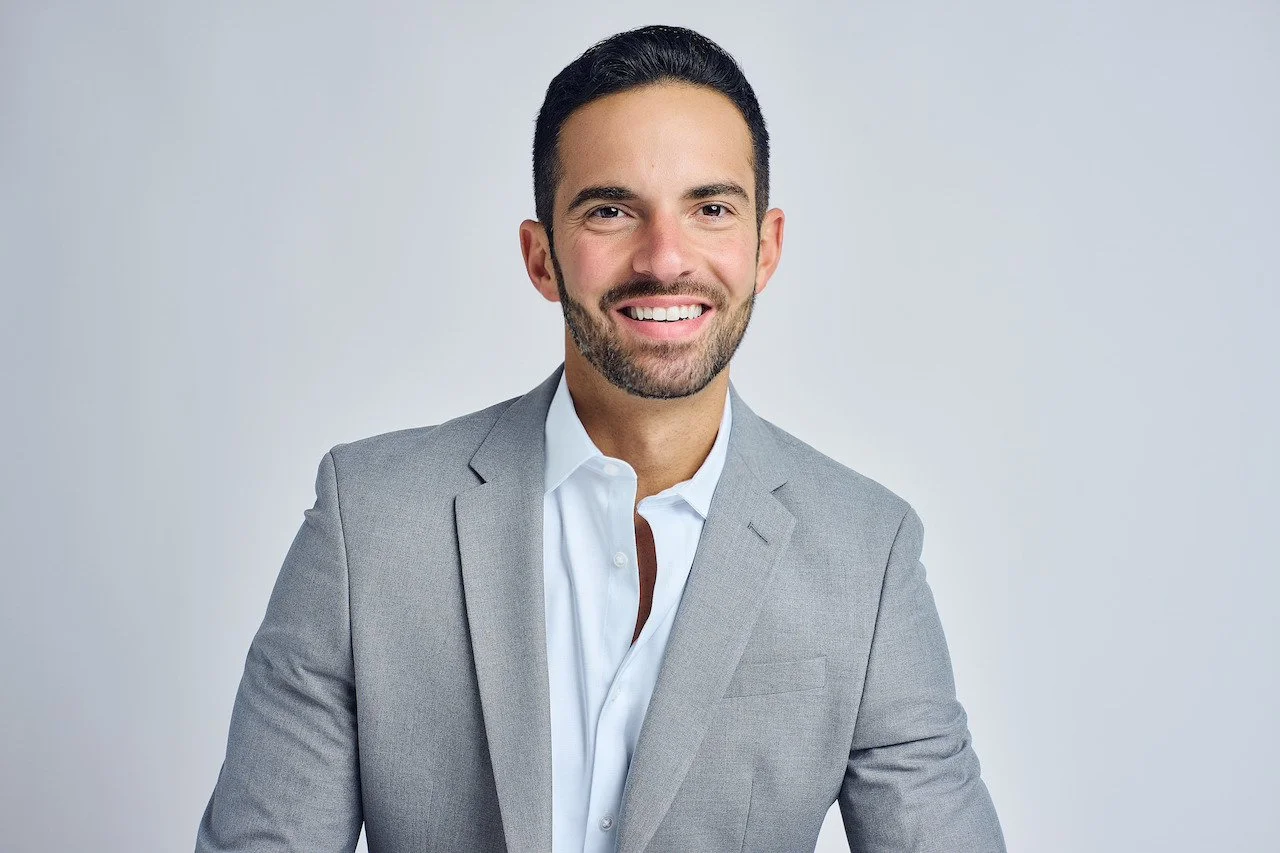
About Vincent Grippi
Vincent Grippi is the Founder and CEO of Grippi Media. He brings over 16 years of experience helping companies leverage digital marketing to accelerate business growth, reach new customers and build brand equity.
Vincent has designed and implemented digital marketing strategies for startups and Fortune 500 companies both agency-side and in-house. His work has been featured in AdWeek, Business Insider, Fierce Healthcare, Marketing Dive and more.
Vincent serves as Communications Advisor for The FOXG1 Research Foundation, a leading global rare disease patient organization. With support from the Chan Zuckerberg Initiative, FOXG1 Research Foundation is driving the research into treatments, cures and therapies for individuals with FOXG1 syndrome.
Vincent is the Producer of several leading healthcare podcasts, including CareTalk: Healthcare. Unfiltered., Amazon’s Health Innovation Podcast, and more.
-
Sara Payne [00:00:00]:
Welcome back to the Health Marketing Collective, where strong leadership meets marketing excellence. I'm your host, Sara Payne. Today we're talking about the new gold rush happening in marketing right now, AI search. You may also know it as GEO or aeo. Search is evolving fast. There are new acronyms, new tools, and in some cases, entirely new budgets. Depending on who you listen to, this is either the next major evolution in how people discover information, or it's being massively overhyped.
Sara Payne [00:00:38]:
To dig into that tension with me today, I'm joined by Vincent Grippi, founder and CEO of Grippi Media. Vincent has spent more than 16 years designing digital marketing strategies across startups and Fortune 500 companies, and his work has been featured in AdWeek, Business Insider, Future Fierce, Healthcare, and Marketing Dive. He's also the mind behind several healthcare podcasts and spends a lot of time thinking about where marketing is headed next, especially as AI reshapes how people find and trust information. Vincent, welcome to the show.
Vincent Grippi [00:01:11]:
Hey, thanks for having me, Sara. And I have to say, out of every podcast I've ever been on, that was the best introduction I think I've ever had.
Sara Payne [00:01:17]:
Nailed it. Nailed it. Well, we might as well just stop there.
Vincent Grippi [00:01:20]:
No.
Sara Payne [00:01:20]:
This topic is so important to marketers. I'm personally really excited for this conversation today. I know I'm going to learn a lot alongside everybody else. So let's start right in with this fact that there's just so much noise around AI search right now, all the acronyms, different tools and sources saying different things. When you step back, Vincent, and you look at the market right now, where do you think that sort of confusion is coming from for people?
Vincent Grippi [00:01:50]:
Oh, that. That's an easy one. I think with all things AI right now. Right. It's a new technology that a lot of people are trying to get acclimated with and also trying to kind of get ahead of in different areas of marketing. I think in AI search in particular, or search in general, is probably the area of marketing, I think that has been hit the hardest by AI. It's seen the most disruption because the mechanics have fundamentally changed. However, I think where all of the misinformation is coming from, it's the same place that you would find in other pockets of marketing.
Vincent Grippi [00:02:26]:
It's the tools. It's the companies that are producing the tools. And then you have the fringe consultants and agencies that try to get ahead of it and capitalize on it, and they promote things, like you said, new acronyms, as if marketing didn't have enough of those already. And they try to add all of this urgency and this fire beneath, you know, this new concept of AEO and GEO and all of these other things. But this is actually coming at perfect timing because this is within a week of Google coming out and making it abundantly clear that AEO and GEO are not a thing, they're a myth. It's just SEO. But we'll, we'll get more into that.
Sara Payne [00:03:07]:
Yeah. Lysa, let's talk a little bit more about. Where do you see the biggest disconnect between what people are being told and what's actually happening?
Vincent Grippi [00:03:15]:
I think the biggest disconnect is that people are being told essentially that search is all AI now and that everything is strictly about visibility, mentions and what have you. And sure, that stuff is important, and it was always important with traditional SEO too. But where it gets dangerous is that they're starting to recommend searching tactics. Not even strategies, but like tactics that try to hack the algorithm, that try to get them mentioned. So be that scaling content with AI, which would just be like creating like 50 to 100, like blog posts a week using AI, you know, spam posting on Reddit, where you create posts that might seem like an organic, natural question on the surface, but it's really just an excuse to just mention a brand or a solution. Things like that that end up not only getting you booted from these platforms, but actually could hurt your site in the long run. There's a very notable SEO in our space, Lily Ray, who I look up to, always have. She's published some awesome reports on her own substack that show what happens to these brands, which we've actually seen in the health insurance space, that try scaling content rapidly.
Vincent Grippi [00:04:31]:
Because, hey, it's getting us mentions, we're getting featured AI searches by doing this works for like two months and then you just tank and there's no coming back from that. Once, you know, Google and these other platforms become privy to you playing their system or hacking their system, you're not going to be in good standing with them. So I think that that's one of the most dangerous things are all the negative tactics that people are being fed and the fact that, hey, look, like all of the tools out there that people are using to measure this stuff, they're. They're all wrapper tools, of course, you know, built on ChatGPT, Claude, what have you. So they're doubly expensive to run just on that alone. But on top of that, you know, they're trying to charge you for all of these extra features. And I guess Value propositions that don't actually exist, like rankings in AI searches, which just simply is not a thing. There's no such thing as ranking in AI search.
Vincent Grippi [00:05:28]:
So in terms of the danger here, I think it's, you know, harm to your site, harm to your brand's reputation and your trust, and then also just blowing tons of money and resources on redundant tools and tactics that really don't get you anywhere.
Sara Payne [00:05:43]:
Yeah, for sure. And this is precisely why we wanted to have this conversation today, is to help people sift through some of that noise and avoid making some of those mistakes. And as you were talking and talking about hacks and silver bullets, I'm like, how have we not learned that already? Right. That if something sounds too good to be true, it likely is. Right. And it's going to end up doing more harm than good. So appreciate you sharing that advice.
Vincent Grippi [00:06:07]:
Yeah, of course. Yeah. It's like the same people that are saying on LinkedIn, I just replaced my marketing team with like two AI agents and now I'm a billionaire. And it's like, yet somehow you're still broadcasting from your parents basement. Yeah, I mean, like, it's just, it's ridiculous. And you know, to that point, Google over a year ago made it very clear on their website, I mean, in their developer tools, hey, you do not need to do anything extra to rank in or appear in AI searches beyond just traditional SEO fundamentals. Just last week, it's obviously reached ahead. They've had to literally come out and like spell it out for people.
Vincent Grippi [00:06:45]:
A, E, O, G, E, O, Not a thing. It's just SEO. And please stop listening to all of this awful advice out there.
Sara Payne [00:06:52]:
Yeah, yeah. I mean, I wanted to dig in. You're absolutely right about that. And I wanted to dig in a little bit more from a practical perspective on what marketers should be focused on. Because the reality is that AI is changing how people search and discover information. Absolutely. And marketers are being tasked with new objectives to get their content cited. Right.
Sara Payne [00:07:12]:
It's a, it's a new metric on the dashboard now. Right. Get our content cited by AI search engines. So from your perspective, what should marketers be focused on?
Vincent Grippi [00:07:22]:
Well, a number of things. I, I think for first and foremost, it's, it's SEO. Right. If you're doing SEO, you're already doing aeo, geo, aio, whatever, you know, other acronym there is out there that I don't care to try to memorize. Then beyond that, the big one people focus on is visibility. Right. The frequency of which your brand is featured in these AI search results for the prompts that you're tracking. That's important.
Vincent Grippi [00:07:48]:
I think that's great. Visibility has always been a thing both in PR and SEO and what have you. But I actually think you want to go a little bit beyond that and focus more on discoverability rather than just visibility. Right. Traditionally with SEO you could have a brand new website. You could be doing little to no SEO, you're going to rank for some ancillary keywords. You're just going to, whether you try to or not. That's visibility.
Vincent Grippi [00:08:14]:
You're getting impressions from that. People might not be clicking on your stuff, but you're getting those impressions. The discoverability, it adapts a little bit more now to this concept of AI search where no longer do you need to do all of the legwork for research yourself. You're not clicking on 10 blue links, collecting all this information on your own. It's been summarized in one place for you. So what you want to focus on is mapping your content to the types of AI search results you can appear in that would lead to discoverability. There's two types out there. You could be citations, which is just when content from your website or your web page is summarized in an AI search result and they put that little tiny little chip next to it with a link back to your site that basically nobody clicks.
Vincent Grippi [00:09:03]:
Then there's actual mentions. That's when the AI chatbot will actually mention your brand by name. So for citations, let's just call a spade a spade. It's all that informational stuff like say we have a client that's an EHR. If we just wrote a blog post like the 10 Benefits of EHR is like that's out man. That's going to get summarized in a chatbot. No need to click through on that. And like literally every competitor is writing another version of that list.
Vincent Grippi [00:09:32]:
Pickle anyways, for sure. Instead, if you're doing something, you're creating kind of content that warrants a click, like deep research, you're creating a case study. Proprietary data things actually warrant a deeper click. Something that what Google is opposite of what Google calls commodity content. That warrants a click through for citations for mentions which you want to focus on there. That's really the kind of content where people are doing research on your brand. So maybe people are searching like best EHRs or top EHRs for like a solo practitioner or something like that. When you're searching for those, when you want to appear for those kind of searches, the kind of content you want to Provide is stuff that supports that research layer.
Vincent Grippi [00:10:19]:
So things like comparisons to other products in your category, your features, your pricing ratings and reviews, which is all external to your website, testimonials, things like that. I think that's the big focus. And then, you know, lastly is, and this is one thing I love about AI search, to be honest, is that it goes beyond those rigid keywords. Right. That you have always kind of run into or were limited by in traditional search. So for example, like you could search something long tail in Google and it just always dilutes it down to just like a little keyword and that's it, you get what you get. That stinks because you don't get, you get limited information that way. And then as a marketer you're like, well, shit, we need to optimize for that keyword.
Vincent Grippi [00:11:08]:
And then now you're creating broad content and people are getting broad content in return, so you're not really going anywhere. What I like about AI search is that it's something that it allows you to extrapolate your SEO strategy to different channels. So YouTube, which is always favored in AI search, social media like Instagram, you could literally search for posts by type, by theme, you know, even podcasts like one we're on now, Spotify, AI search enabled. That's awesome. So you can extrapolate your SEO strategy now to different channels because the game now is less about, you know, trying to generate a click, even though that would be nice to get those, and more about ensuring that your brand is discoverable and that you're present online. Cutting through what you just pointed out, that noise that's inevitable and has been exacerbated by AI for sure.
Sara Payne [00:12:01]:
Yeah. Well, if people haven't gotten the clue already, right up to this point, commoditized content is out, right? Originality, case studies, data. Which is interesting because AI is what produced a proliferation of a commoditized content. Right. And not great content, but what AI itself is actually favoring is, is the original content, the data, the case studies. Right. So what I'm hearing is really make sure you are locked tight on your SEO strategy, your keyword strategy, but that you are the production of content, you're raising that bar and really making sure that those investments are happening around that original content.
Vincent Grippi [00:12:43]:
Yeah, exactly. And, and you know, with that, hey look, AI search again, it's, it's non deterministic, it's, it's. I think there was a study from Spark Turo, they showed that you have like a 1% or less than 1% chance of appearing for the same prompt twice and even less than that in the same order. So you have to understand there's only so much you can control when it comes to LLMs. I mean, Google itself had kind of came out on a recent podcast and had. I forgot who it was from, Google in particular, but it was from their, their own podcast where he came out and he said, you know, hey, when you introduce LLMs to search, there's a big element of it that is a black box. Like there's only so much that can be controlled. So you have to just understand when you're going into this, despite what all of these AEO GEO tools and consultants are saying, that there's really only so much you can actually directly control when it comes to AI searches.
Vincent Grippi [00:13:41]:
You can just sort of influence the information that's brought in there and you do that through SEO.
Sara Payne [00:13:48]:
Yeah, great point. Super helpful context. We've already talked a bit about where the market is over correcting and you know, to kind of broad brush, high level, what people should avoid. But I want to go back to that just to see if they're from your perspective, specific things that markers marketers may be putting time, energy or budget into that you feel are just not helpful and potentially a waste of money.
Vincent Grippi [00:14:18]:
Yeah, so there's a lot in terms of waste of money, hands down. And again, I'm not trying to pick on all of these AI search tools. No, of course not. But you have to call a spade a spade. Just for the uninitiated, the way traditional search used to work and still does is you're using tools that tap into Google's API. It's giving you context around what the specific keywords are, what their average search volume is and what that competitive density looks like for those keywords. It's not that way with AI search. You're tracking prompts.
Vincent Grippi [00:14:55]:
There are no, there is no set like archive of prompts. There's no official list of prompts with average like search volume or competitive density. It's quite literally speculation. These tools, when you invest in them, they'll give you a list of prompts and you will find that they're always bad. Like you really have to customize them and what'll happen is, is they charge you by the number of prompts that you have to track. But here's the thing there, you're, you're not just targeting something like best ehr, right? You have to get specific, you have to track a number of prompts, a number of variations of that best ehr. For, you know, rural hospital. Best EHR for like a solo practitioner.
Vincent Grippi [00:15:37]:
Like we said before, best EHR for like a, you know, physical therap. There are tons of prompts that you have to track, and that's where you're getting nailed because you're going to be spending all of this money for these tools to essentially do what you can do manually. Although I will admit, I don't think you should. It is a pain in the butt to sit there and prompt all of these different chatbots over and over with the same question, the same prompt that you're trying to track and then try to gauge visibility around that. Because here's the thing, you try testing out all of these different tools, you will find that every single one gives you different data and then they give you different metrics that you're trying to optimize for, like your overall, their own proprietary arbitrary, like, brand visibility score and things like that. Now look, those things aren't like inherently bad, but if you're doubling down on something like that, which is something I see a lot on Reddit, people saying, like, oh man, like, my visibility score on this tool is at like a 2%. How do I get it up? And it's like, dude, that's just that tool. Another tool might tell you you have like 0% or that you're not even appearing for this prompt at all when you are.
Vincent Grippi [00:16:47]:
So I think that that's where I think people are blowing the most money. Where I think they're playing with fire is a lot of these AI search tools now are trying. They know that they're not going to win on AI search alone. They can't. They just simply can't. I mean, there's legacy tools out there like Semrush, Ahrefs offer the same thing. They're already embedded in your workflow, what have you. So they're doing this thing now where they're trying to be like, you're all in one replace your marketing team toolkit, where not only will they identify the opportunities for you, but they'll write the posts for you, and they'll write them 10 times faster and 10 times as much as like, you know, the next person ever could.
Vincent Grippi [00:17:24]:
And the people doing that, when you're scaling your content like that, sure, it might take a little bit before Google or ChatGPT or somebody catches on and you might get some hits, but you will inevitably torture website. And that has always been the case. And you are playing with your user's trust when you do that. So I think yeah, Again, those are the two areas where I say you're wasting your time and you're wasting your money. You need to be careful with both.
Sara Payne [00:17:52]:
Great points. You mentioned some of these scores that you might be getting from these tools. What are some valuable metrics that, that people want to be paying attention to?
Vincent Grippi [00:18:05]:
Okay, so first I think you want to make sure your SEO health is good and everything that comes along with that, like your rankings, your traffic, your, you know, share a voice, all of that stuff. We'll touch on share voice again. But the big one, again, everyone focuses on is visibility. And I don't think there's anything wrong with that. So that's just if you're tracking prompts, right? Like that's the total number of AI answers that your brand were mentioned in that you appeared in, divided by like the total number of searches you executed. Times 100. You get between like 20%, 40%. Great.
Vincent Grippi [00:18:37]:
That, that, that's, that's strong. That's awesome. But that varies by category. It varies by competition and also prompts, right? Like not, you know, wow, okay, if you own coverage on like one prompt for a month, that's great. But if it's not like really one that moves the needle or something, or the competition is small, it's kind of moot. I think the way people should approach it is by triangulation, right? I think that you should take, you should combine, of course, the prompt monitoring and all of that stuff with taking a look at your actual market share of voice, which there are a number of tools out there that do that and combine that with your brand reputation or your brand sentiment analysis. So you could use something like Meltwater for both of those latter things I mentioned and then try to correlate it with activity on your website or business activity. Right? Are you seeing more AI traffic to your site? Even though, like Google Analytics is finally giving us more visibility into that, it's still greatly limited.
Vincent Grippi [00:19:35]:
But are you seeing more activity? Are you seeing your share of voice go up? Are you seeing that the brand sentiment is increasing and so therefore you're seeing more activity? I think that's what matters the most because it's really, really hard to just say, hey, I'm not seeing conversions here. Is this worth it? Is this working for me? Unfortunately, you know, the click through rates, they are going down. And I mean, on Google search alone, it was Ahrefs that did a report that showed that the presence of AI overviews, which, you know, we are, we're all familiar with them at this point. If there Are AI overviews present? The top ranking web pages have seen a decrease in 58% in terms of click through rates. Terrible. If people jump over to AI mode, which Google just this week announced is going to be more front and center in the Google search experience. Only 93% of those searches do not result in clicks and that one came from SEER Interactive. So you kind of have to also adjust your expectations too, unfortunately.
Sara Payne [00:20:37]:
Yeah, for sure. This feels like the right time to talk more about a framework. I know you have one that you like to recommend to folks, so I just think it would be really helpful to try to simplify this and boil it down for a marketing leader, how they should be thinking about all of this so they're not just chasing after these acronyms.
Vincent Grippi [00:21:02]:
Yeah. So again, I think you want to leave with SEO, see how that's going for you. Because to be clear, you can't just kick butt an AI search and then not be doing well on traditional. It just like doesn't work that way. Like you, it starts with, with SEO, like literally. So you start there and you want to make sure that that health is great. Right. And then when you break down those center of the plate sort of prompts that you want to monitor, that to me is critical.
Vincent Grippi [00:21:32]:
I know there's going to be people that disagree because traditionally you want to build topical authority. You want to write about all of these different topics and themes that might tie into your brand. And that's great. But really when it comes to like the AI search stuff, if people are doing research on your brand, you want to really track the things like we were saying before, like best EHRs, a specific kind of EHRs or use cases. You could even map them to your ICPs. And then what you want to do is you should track them. Get a good idea of, hey, as we're building this content out, are we seeing an impact? So something like EHR is for a small business or a small practitioner, an independent practitioner. Can you provide a case study with that? Can you provide one where you're looking at, hey, our EHR across like, you know, however many solo practitioners we have have generated X results, things like that that can actually be cited, that can actually be mentioned and help people evaluate your brand.
Vincent Grippi [00:22:28]:
Same thing on the B to C, the B2C front. You know, we were just joking around about this before we started filming. I had strep throat last week. My doctor from Yale, New Haven Health, before I left, handed me a card to leave him the company a rating on Google reviews. And I was like, oh, this is awesome. And he's like, you know, I don't, I feel tacky giving this to you. But the marketing guys, they said we gotta do this because Northwell, they just moved in and they started an urgent care down the road and like we have to compete with them. And I'm like, well that's brilliant because on the B2C front you should focus on that stuff, getting ratings, reviews, and you can literally correlate the activity as you get more ratings and reviews and you make it clear in the local areas that you serve, what your value propositions are, what your services are and you can directly correlate that to the activity that you see on your site.
Vincent Grippi [00:23:20]:
So that's the stuff that I would focus on and the other framework across the board. And this is just equally important. It's just, and this has always been important in traditional search too is digital pr. You know, it's doing things like podcasts, web, you know, media features, brand reputation management. This is one that's huge in healthcare. It's a very touchy subject. A lot of people tend to leave a lot of negative reviews and negative experiences online. I've seen this with a number of companies.
Vincent Grippi [00:23:50]:
They don't do anything about them, they just leave them floating out there. If you do an AI search right now, like hey, how to use this example again? How's Yellow New Haven's urgent care in, you know, whatever, South Salem, New York. And then what you'll see is they'll give you a full analysis. They'll say, okay, some people complain about X, Y and Z, but you know, overall its rating is whatever you need to be able to do brand reputation management to keep up with the non prompt related stuff that you're tracking to make sure that your brand is in good standard because that's, that's how people make decisions, right? Is, is based on, on your reputation and how much they can trust you.
Sara Payne [00:24:30]:
Yeah, great point. I'm glad you brought up PR because you know, obviously for AI to recognize and share content, it needs to be authoritative, clearly trustworthy, you know, evidence based. And you know, a lot of that sort of third party credibility can come from authoritative news sites.
Vincent Grippi [00:24:47]:
Right.
Sara Payne [00:24:48]:
And that really does sort of element elevate some of those fundamentals that have always been important in terms of earned media and other similar strategies. Interesting that you call it digital pr. Those of us in the business would just call it pr, but we can agree to disagree on that. But anyway, so when you're advising your clients, are you asking specific Questions about how they are approaching their PR and what those strategies look like, and really integrating that conversation into the overall sort of SEO program and SEO strategy and looking at the results there.
Vincent Grippi [00:25:26]:
Yeah. By the way, a lot of my early career was at. Was running digital at PR agency. So I agree with you. It is pr. The term that's annoying in marketing circles with SEO is anything that involves, like your online reputation. They call digital pr. I do agree with you.
Vincent Grippi [00:25:44]:
I do not like that term. Yeah. So the way we sort of approach it with all of our clients is taking a look at like, if they have a PR agency, we work with them. Right. And we kind of get to the table. Exactly. But in a lot of cases, they don't. They don't have one, or they don't have one that's doing much besides like just pitching them the podcasts and things like that.
Vincent Grippi [00:26:05]:
So we do is you could take a look at like the places that your competitors are in, or they're getting featured, where they're getting backlinks from, which is just links from, you know, a different external source back to you. To your credit, what you said earlier, those are weighted differently based upon, like, the reputation of that domain. You can go out all day and buy backlinks. You could buy mentions and crappier publications, things like that, or blogs. Some of them exist just for that. And that won't get you anywhere. You get a feature in something that has a stronger reputation, it moves the needle. So the way to think about it is a lot of times, like, you know, it's great to be able to contribute content like op EDS and things like that, if that's possible.
Vincent Grippi [00:26:51]:
A lot of times, though, when you're working with like smaller healthcare businesses or especially in B2B, where their CEOs are constantly getting pulled in a million different directions. What I've always found, and I found this with the PR teams too, is what we're doing right now is really the sweet spot. It's just getting features on podcasts, reputable podcasts within your industry. And then same thing goes for any other media features that you can get in your industry. And then just traditional pr, you got new products, new features, rolling out, what's your communications plan around that, and how do you loop the marketing team in there to support that? Because now with AI search again, you see things like social media posts and what have you, podcasts that get surfaced in search results, videos, like we said earlier, which is everything is video now, it's important you need to have that component included. So we do there, we like to interface a lot. Like if we land media opportunities for our clients, we like to interface with their marketing team and with whoever the media outlet is to ensure that, hey, the proper information is getting set up, that we're including the proper links that we want to have in there and all of that good stuff to just make sure that there's alignment. Because if you don't do that, you know, you work on the podcast side, it's very easy to just get some coverage and that's it.
Vincent Grippi [00:28:10]:
And then the actual thing that you were hoping to, to focus on gets lost.
Sara Payne [00:28:14]:
Yeah, yeah, absolutely. And some of the reputable outlets, they just, they won't, they won't include, you know, some of the top, top tier. Right, like, like an Associated Press or a USA Today or a, you know, New York Times. You're not always going to get the backlinks right. But, but the mentions, the mentions for sure are, are helpful and very, very important. In our prep conversation, you mentioned something that I thought was really interesting, and this is that AI search is opening up new ways to discover more niche and specific content. Can you talk about that opportunity?
Vincent Grippi [00:28:52]:
Yeah, it's pretty cool. So there's what I love about AI search and I'm like a big Wikipedia guy. I'm always looking things up. I'm not going to lie, I'm pretty addicted to running AI searches all day long. The problem is that I think 45% of the searches contain erroneous information. So who knows, maybe everything I'm saying today is erroneous. No, but I think what's cool about it is, to give you an example, I wrote about, I had a blog post or a newsletter about a year, year and a half ago where I coined like my own term for something. It was like, I called it the Canyon of Meh, which is people just basically abusing AI to create crappy content, creates all this mediocrity.
Vincent Grippi [00:29:38]:
When I started doing like some sort of AI searches like I had seen like the Canyon of Math, like get cited in some of the, in some of the searches I was writing, I'm like, that's so cool because it gives you like more granularity into things that would otherwise not get discovered. Whether it's a coined term like that or it's like very hyper specific questions that it can parse through video podcasts, anything books. And I know that there's a lot of copyright issues there, so we'll save that discussion for another day. But there are so many different sources I could pull information from. And to your point, and the last question, which I love is, yeah, you're right, you're not always going to get a backlink from a media feature and a lot of times when you do, it'll still be like a no follow, which, which means it really holds no SEO value whatsoever.
Sara Payne [00:30:30]:
Right? Right.
Vincent Grippi [00:30:32]:
But the mention now, just mentioning the brand, getting the information out there, goes so much further and you actually get something from that. So what I think that is great about that is it allows you to finally break the mold of what we talked about earlier, of having to satisfy these rigid keywords that definitely do not cover a topic, at least not at depth, and be able to break out beyond that and cover things in more detail and be unique. That's the kind of stuff that does well, right? The non commodity content. And I think that that's the real opportunity with AI search. But again, you're seeing too many people focus on finding the right prompt and oh well, you can fan this prompt out and then you could track the 20 prompts that come with it. And it's like, dude, this is just the same thing as SEO. Then like you're going for the same like keyword, you're keeping it pretty rigid. Try to blow it out more and create the kind of content that you want to create.
Vincent Grippi [00:31:33]:
But just keep in mind what you want to map it to. Right. A citation, a mention or what have you.
Sara Payne [00:31:39]:
Yeah. One of the many great points that you just made goes back to the earlier point around originality, Right. And unique content. But it isn't just the content that you are writing for your website or your blog or an op ed that you're publishing. It is also these phrases, these catchphrases, the originality of what your company leader, your spokesperson is going to say on a podcast. Right. And so the importance of message training. And I don't mean scripting people, but I mean originality, right? To, to being a true thought leader in your industry.
Sara Payne [00:32:21]:
Right? Let's not get up at the podium or behind the microphone and say the same damn thing that everyone else is saying in the industry. Right. Let's put some originality and some brainstorming and some creativity around the ability to do that. And some leaders are better at that than others. And we have to be, we have to be real about that and also invest the time and potential training into getting others there who are less comfortable with, you know, having dialogue and talking about things that are maybe a little bit disruptive or, or kind of coming up with these, these catchphrases Some people are going to be sort of naturally good at that more than others. But I love your point that originality is true for both what you approve on paper and submit to be published as it is, what comes out of your mouth in real time when you're on a podcast or an interview.
Vincent Grippi [00:33:18]:
It is. Yeah. And it's funny that you mentioned that there are studies that talk about how depending on AI or like, using it a lot for writing and stuff like that, it does bleed into the real world. I mean, we produce a number of podcasts and I can tell you the amount of times I've heard people say the same thing verbatim, you know, and they're using like, ChatGPT language. And it's strange because right now, to your point, the whole idea of being unique, it's almost as if, like, we're coming around to appreciating, like, all of the little warts and imperfections that come with being unfiltered. And you're seeing, like, I think it was yesterday it was announced that LinkedIn is finally, like, of all places, is clamping down on the, you know, the incessant use of AI for posts and commenting and things like that. And you just sort of like, realize, like, you get tired of, like, the really buttoned up, like, sort of like posts and content. Like, I think what people are looking for is stuff that's more nuanced, more unique.
Vincent Grippi [00:34:25]:
Down to earth podcasts, for example. The two top reasons people listen to podcasts is for education, to learn something, and to get a professional perspective on a topic of interest. If everybody's saying the same thing and, you know, they're, they're asking ChatGPT, oh, what did this guy say? What did that guy say? And they're just trying to align with that. You lose. If you're trying to differentiate from that, offer a different experience, then I think you're memorable and you stand out. We train a lot of companies in, like, how to adopt social media and how to get CEOs to get in front of the camera, not to do the annoying, like, building in public thing, but get used to filming a reel, get used to shooting like a short. And it's so funny. Like, the number one thing that holds people back from doing actually is just things like, oh, you know, I don't have the equipment, equipment, and then like, I have to write a script.
Sara Payne [00:35:10]:
Yes.
Vincent Grippi [00:35:10]:
No, you don't. You really don't. You just, I mean, obviously be intelligible about what you're saying, but it Goes a long way to just pop open your phone and just speak directly to your audience.
Sara Payne [00:35:21]:
And the more you do it, the more you get used to it, right? It's, It's. It's one of those at. You just gotta take the AT mats. Right? For those of us who've been in podcasting, we remember really early on how that felt too. Right? Nobody loves the sound of their own voice, right? Nobody loves looking at themselves. But hey, the more you do it, the more you just get used to it. And, you know, you're absolutely right. You just, you know, you got to trust that your comms team, your.
Sara Payne [00:35:44]:
Your marketing team isn't going to put something out there that doesn't make you look great. Right? But you got to get out there and start taking those AT bats because it'll get far less, Less painful the more you get into it.
Vincent Grippi [00:35:56]:
Yeah, I can agree more with you.
Sara Payne [00:35:58]:
I think a great question to end on here, Vincent, would be what. What does all of this unlock for marketers who get it right?
Vincent Grippi [00:36:07]:
I think it's, it's. Honestly, I think it's. It's trust, really. I really do. And to go back to Discoverability, I think we're going to get to a point where I think with AI search and look, I know this stuff is changing every day. Who knows, like, things could literally be outdated, what I'm saying now as we speak. But I do think we're going to get to a point where you can choose your preferred, like, information sources in like a Claude, a chatgpt, what have you. I know you could basically do it with Google now anyways, like, with Discover and stuff, but I, I do think that, like, it gets to the point just like when you're reading like a newspaper, you're reading a blog, or listening to podcasts that you enjoy.
Vincent Grippi [00:36:51]:
I think what happens is you just get to a point where it's like, okay, this is a source of, like, good information. This person is talking about things that I'm not getting everywhere else. I'm big like that with podcasts. I fall asleep every night listening to podcasts. I think we joked about that, too. The second one of the podcasts that I follow starts, like, dropping all of this AI nonsense in there, where I could tell that they're phoning it in or they're just dishing out misinformation. Where a platform doesn't work that way, a feature doesn't work that way. I'm done.
Vincent Grippi [00:37:23]:
I check out on them because, like you said, there's so much noise there's so much stuff out there. If you're bad, if you just, you just turned sour on me or you're phoning it in, I'll go to the next person. But the thing is, you need to also get discovered. And I think the way you get discovered is by again, mapping your content to your ICPs, mapping them the kind of AI search results that you want to appear in. But most of all, above all things, is creating substantive content that's not commoditized, that speaks the language that your audience speaks, and it walks the walk as well. And I think that that's where a lot of brands struggle because they're too focused on just trying to tackle that one keyword or chase that one tactic that gets them mentioned. And, you know, tactics only get you so far.
Sara Payne [00:38:10]:
Yeah, absolutely. Well, thank you for all the great advice. This is a really thoughtful conversation, bringing a lot of clarity and nuance to a topic that for some might feel a little overwhelming right now. Vincent, how can our listeners get in touch with you if they want to talk to you more about this topic?
Vincent Grippi [00:38:28]:
You could find me@grippymedia.com that's gripimedia.com or look me up on LinkedIn. I'm always posting my non AI generated content over there.
Sara Payne [00:38:38]:
When you're not falling asleep listening to podcasts, you're probably falling asleep scrolling LinkedIn, right?
Vincent Grippi [00:38:43]:
Oh my God, no. I'm trying to not have nightmares at night. I'll stay away from that.
Sara Payne [00:38:50]:
Well, I really appreciate you being here today. Thanks again for joining me.
Vincent Grippi [00:38:53]:
Thank you for having me, Sara.
Sara Payne [00:38:55]:
And to our listeners, be sure to subscribe to the Health Marketing Collective, where strong leadership meets marketing excellence, because the future of healthcare depends on it. We'll see you next time.
Who Should Be Our Next Guest?
Contact us at connect@inprela.com with your suggestions for guests who are making waves in Healthcare marketing.