
Welcome to the Health Marketing Collective, where strong leadership meets marketing excellence.
In today’s episode, we sit down with Dr. Maryal Concepcion, a trailblazing family practice physician and the voice behind My DPC Story podcast, to explore the rise of direct primary care (DPC) and its transformative impact on healthcare communities especially in rural America. Hosted by Sara Payne, the conversation captures the spirit of innovation at HLTH2026, highlighting how DPC models challenge the status quo, foster deep patient-physician relationships, and offer financially transparent, accessible healthcare solutions.
The conversation delves into how DPC stands apart from both concierge and insurance-driven models, why patients are gravitating toward this approach, and the marketing challenges and opportunities faced by physicians operating outside large health systems. Dr. Maryal Concepcion also discusses the importance of transparent pricing, the role of word-of-mouth in practice growth, and how DPC’s community-focused ethos is vital for the evolving healthcare landscape.
Key Takeaways
Direct Primary Care: Healthcare Reimagined for Everyday Americans: Dr. Maryal Concepcion defines DPC as “concierge medicine for the everyday American” restoring the classic, direct doctor-patient relationship, but without the elitist price tag. The model operates outside of insurance, letting patients access personal, broad-scope care at a transparent monthly rate, particularly benefiting under-served rural populations 00:36-01:21.
Word of Mouth Over Billboards: Human Relationships Drive Practice Growth: Traditional marketing takes a backseat as DPC clinics grow mainly through word of mouth. Dr. Maryal Concepcion recounts that 80% of her first-year patients joined without fully understanding the DPC model they simply trusted her as a physician. This underscores the power of authentic, lasting relationships in healthcare marketing patients want connection, consistency, and a partner in their care 04:07-05:07.
Transparency & Cost Conversation: Making Healthcare Understandable: One of DPC’s biggest draws is its commitment to transparent, easily accessible pricing for everything from labs to procedures. Dr. Maryal Concepcion shares how her clinic’s website openly compares costs with insurance-based rates, empowering patients to make informed decisions and often discover that DPC is more affordable than they expect dispelling the myth that quality care can only be had through expensive insurance premiums 07:05-07:52.
Trust Through Time: The Power of Ongoing Patient-Physician Relationships: With more time to dedicate to each patient, Dr. Maryal Concepcion and her colleagues build deep, trusting relationships that go well beyond a transactional visit. This foundation affects everything from vaccine conversations to chronic disease management, and gives patients the space to be vulnerable making DPC’s holistic, flexible approach a model for the wider industry 10:01-10:55.
Physician Voices Matter: Marketers Must Champion Authentic Storytelling: Both Dr. Maryal Concepcion and Sara Payne emphasize that healthcare marketers should directly involve clinicians in their storytelling. Authentic clinician-led content resonates more deeply and builds trust bringing physicians into marketing efforts isn’t just a nice-to-have, it’s essential for creating relatable narratives and consistently reinforcing the value of care that truly puts the patient first 11:20-13:18.
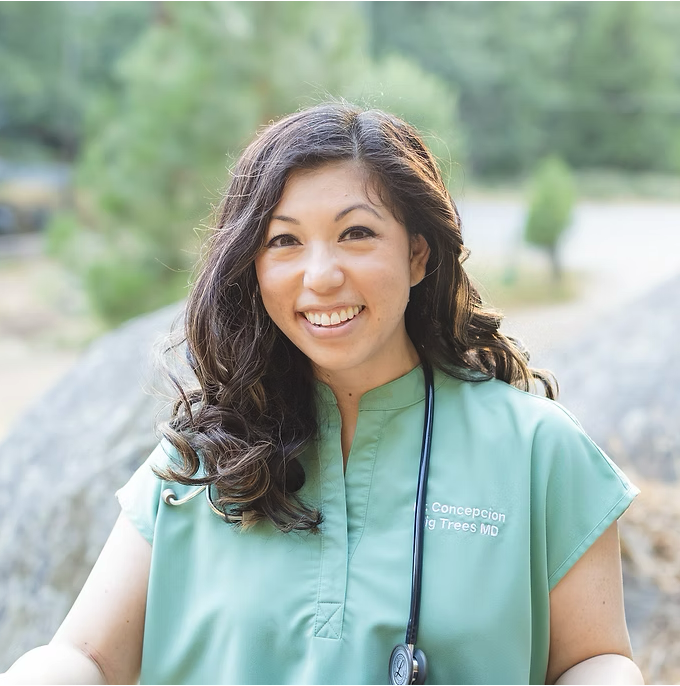
About Dr. Maryal Concepcion
Dr. Concepcion is a board-certified rural family physician dedicated to serving patients in Northern California since 2012 and Calaveras County since 2015. Passionate about community-focused medicine, she provides comprehensive care for patients of all ages, from infants and expectant mothers to children and adults, including in-office procedures.
After years as an employed physician, Dr. Concepcion chose to reclaim medical decision-making—prioritizing direct doctor-patient relationships over the constraints of insurance-driven care. Since 2020, she has been a vocal advocate for Direct Primary Care (DPC), hosting My DPC Story, a podcast that highlights physicians practicing under the DPC model.
A national advocate for independent physician practice, Dr. Concepcion actively engages in healthcare policy discussions, speaking on Capitol Hill and at national conferences. She is also deeply committed to mentoring the next generation of medical professionals, guiding pre-med students, medical students, residents, and fellow physicians on their journeys in medicine.
-
Sara Payne [00:00:05]:
Welcome back to the Health Marketing Collective, where strong leadership meets marketing excellence. I'm Sara Payne, and we're coming to you from HLTH 2026, where we're talking to some of the bold voices that are shaping the future of healthcare. Joining me today is Dr. Maryal Conception. You are a family practice physician. Yes. And you specifically have a direct primary care practice. Tell us a little bit about your practice and the community that you serve.
Maryal Concepcion [00:00:36]:
Absolutely. Thank you so much for the question. So direct primary care, for those who are maybe not familiar with the term or they think that it's concierge, direct primary care is what I like to call concierge medicine for the everyday American. It's basically the old-time relationship that a patient has with their physician, and they can call their physician directly. So as a family physician in rural America in particular, it is extremely important, important that my way of practicing medicine is really preventing barriers as much as possible for people accessing that care. And I'm excited to, you know, be talking with you and just elevating the voice of the physicians also in specialty care like cardiology, rheumatology, even surgery, who are practicing outside of the insurance-driven system and going specifically to invest in their practices, working directly for their patients.
Sara Payne [00:01:22]:
Yeah. And I forgot to mention, you're also a host of a podcast called My DPC Story, which is the platform that you're using to really elevate a lot of those voices that you're talking about.
Maryal Concepcion [00:01:33]:
Yes, absolutely. I've had the extreme honor to interview over 350 physicians all doing direct primary care just because, you know, our colleagues in medicine, there's a lot of fear that, you know, private practice is not possible. And so I love that with every single episode, a person is hearing not only what the history of our colleague was, but how they have gone, ventured into business even without an MBA, and how they've had to do things like marketing, like talking with, you know, different avatars in the world to share what they're doing in their communities.
Sara Payne [00:02:05]:
And the community that you serve specifically is in California. Yes. Tell us a little bit about that community and the patient population that you see.
Maryal Concepcion [00:02:14]:
So Arnold, California is about 2 hours south of San Sacramento, 2 hours south of South Lake Tahoe, and then about an hour north of Yosemite. So we live in the Sierra Nevada foothills. Our town is about 4,000 people full-time. Definitely a lot of the Bay Area folk moved to our area because the cabins and the traffic was a lot different than South Lake Tahoe. And so when we moved there, my husband and I are both full-scope family doctors, it was a complete breath of fresh air to say, oh, I can actually go see my doctor in town for this issue. I don't have to go see a specialist for every little thing because these doctors are actually trained to do 80 to 90% of everyday things that a physician should be trained to do in family medicine. So in terms of access of care, our nearest emergency rooms are about 45 minutes away. If you want to find the nearest trauma center that has a NICU, that's an hour and a half away.
Maryal Concepcion [00:03:12]:
Wow. So even myself, I drove in labor an hour and a half to get to the hospital. So I have lived the life of, you know, the rural citizen needing maternal care and wishing with every contraction that that care was closer.
Sara Payne [00:03:26]:
Yeah, absolutely. Great point. One of the reasons why I want to talk to you here at Health specifically is that a lot of us here at Health are talking about driving change, disrupting the system, presenting something different maybe than what people are used to. And I view, maybe this is just me, but direct primary care still feels like for a lot of people, Something that's different, or maybe they're not used to, maybe it's going to cause some discomfort.
Maryal Concepcion [00:03:52]:
Yes.
Sara Payne [00:03:53]:
What has been your experience in having a direct primary care clinic and practice? How do you get people— what is that conversation? How do you get people to— what are they afraid of or concerned about, and how do you get them over that hurdle?
Maryal Concepcion [00:04:07]:
Absolutely. So this is such an important question, especially when it comes to the stories that we're bringing to our communities and That definitely impacts like how we market ourselves. Doctors are so used to big systems like putting their faces on billboards, putting their faces in newspapers. And so when a physician goes out on their own with no marketing or MBA degree, they're like, oh my gosh, what do I do? The thing that I have found though is that word of mouth is how our practices grow. And I absolutely love that because it just proves over and over with each DPC practice opening that you don't necessarily have to understand what DBC is, but these patients are investing in their doctors because they don't want anybody else. Like, for my patients and my patient population, the first year, probably 80% of the people who joined my practice, they said, I don't even know what this is, but how do I do it? They didn't even care. And so they were, they were so invested in that. They knew who I was as a doctor that I, you know, if I didn't know the answer, that I would take the time to look it up.
Maryal Concepcion [00:05:07]:
They knew who they were buying into. And so I think that that's something that, again, we find all over the nation in rural, urban. You have patients who are dying for more time with their doctor, a doctor who knows them over time so they don't have to repeat their chronic medical history or their medications every single time. I will say in terms of talking to the pain points of DPC, going into 2027 with healthcare costs expected to go up immensely all over the country, and people losing their health insurance if they're on Medi-Cal or Medicaid. You know, I think that there's a big challenge when people are not invested in that relationship and going after that relationship to join a DPC. When people are looking at it from the cost of health insurance, they, you know, will shy away because it's an extra cost. However, if you look at it, and this is what we find with the members who don't necessarily join right away, but they find that You know, the mass of medicine, of healthcare versus health insurance is very different. If somebody goes to the emergency room, it might be $1,800 for a cold that you're getting addressed because you couldn't get in to see your primary care doctor, non-physician provider.
Maryal Concepcion [00:06:15]:
And then my patients who have lived those experiences, they're saying like, wait a minute, for less than that, you can be my personal doctor that I can call or text for the whole year? Like, how does that work? So that, The hesitation to join is also what pushes people to start asking the opposite question of like, wait a minute, how could that work for me and my family?
Sara Payne [00:06:36]:
And do you have, you or somebody else on your team, have some of those math equation conversations with the community or the individuals that are interested in coming through you to help them? Because I feel like a lot of this insurance and costs and everything just feels so unapproachable that people don't always have the answers. And so are you guys kind of guiding them a little bit into that so they can see, right, what that might look like and that maybe it is actually more cost-effective than that?
Maryal Concepcion [00:07:05]:
Yeah, absolutely. And so I immediately, when you said that, I think of like the grocery ad where you can see the coupons as to like what bread is on sale. Our websites typically have completely transparent pricing, sometimes comparing pricing of, you know, a lab that you would pay with insurance versus a lab that you would pay in direct primary care. So absolutely, we pride ourselves as a movement on this is transparent healthcare, not health insurance. But at the same time, like if you're looking at the, if you're wanting to compare, here's what it costs at our practice to be a member, to have a procedure, to have blood drawn, to have imaging done like a mammogram. So our patients find it refreshing to be able to go online and be like, what I just saw is what I'm being billed. And there's not an extra copay every single time I go in.
Sara Payne [00:07:53]:
Yeah, absolutely. When patients choose direct primary care, what are they looking for that they haven't been able to get elsewhere? And you kind of alluded to some of this, but I want— I wanted to go here specifically and emphasize this because I think there's a lesson inside of that, that what the rest of healthcare and all the other stakeholders can learn from that.
Maryal Concepcion [00:08:13]:
Absolutely. Yeah. And I really appreciate, you know, honing in on this point because the number one reason that we exist as a movement is because there's lack of access. There's lack of equitable access. There's lack of access to people who are not employed. And even if you have an employer, they might not offer health insurance. And so for us as a direct primary care movement, we're really showing that there is a financially sustainable way to have a practice, but also do the work that you trained to do, work at the top of your medical license. and have no more discussions about burnout unless you're recreating it yourself 'cause you're not using automations and things like that.
Maryal Concepcion [00:08:52]:
So I will say that the number one thing that I love, you know, talking with people about is we are talking about health spend and health accessibility through AI and whatnot. But what we're delivering is human-centered relationship-based care supported by these tools to help us keep costs down for our members. And we're community-focused and community-based. So We are the people who can advise best on, I know your resources here in this community are lacking because we live here too. So I think that this is why patients and physicians and people who are invested in healthcare in general are learning more every day about what the direct primary movement can do to help inform other people and other ways of practicing medicine.
Sara Payne [00:09:37]:
Yeah, absolutely. Earlier you were talking about the relationship.
Maryal Concepcion [00:09:41]:
Yeah.
Sara Payne [00:09:42]:
The personal relationship, the recognizable face, but there's trust that's built there, right? And physicians, whether you're direct primary care or not, physicians are among the most trusted voices in healthcare, which is amazing. What has being on the receiving end of that trust taught you about what makes people listen or being open to maybe trying something different?
Maryal Concepcion [00:10:01]:
Yeah, I think that the thing that I think about that has impacted trust the most in my practice is the fact that we have a relationship over time. The time that I can invest with my patients because their son just passed away or their cat just passed away, it is never a standard amount of time. So I'm able to be flexible with that time. And so because I'm listening to, wanting to know about the whole person, that trust is very different when we're talking about vaccine hesitancy, when we're talking about— starting a medicine and somebody doesn't want to start a prescription medicine because I'm already asking them about like, I saw you at the grocery store. I know what was in your cart. And so, you know, they know that I'm somebody that they can, you know, be honest with even if they're not proud of it. I'm like, I'm human too. I'm not proud of everything I do.
Maryal Concepcion [00:10:55]:
Yeah. And so just being able to be vulnerable with your patients because you're not, you have the time to do that. It is so powerful and it's such a breath of fresh air because before I used to have double, triple visits and it's like, that's not a way to take care of a human being.
Sara Payne [00:11:09]:
Yeah, absolutely. How do you think healthcare marketers could do a better job of bringing physician voices into the conversations that patients are already having?
Maryal Concepcion [00:11:20]:
Yeah, so I think that especially, you know, marketers, people who are an expert in marketing, I should say, you know, we can learn from each other.
Sara Payne [00:11:31]:
Of course.
Maryal Concepcion [00:11:31]:
I think that absolutely, like, you know, the way that we're learning things, sometimes people are Googling, listening to my podcast, like there's not an expert marketer, you know, who's regularly talking to most of our audience. But I will say that when it comes to the physician voice, I think that the commonalities of learning, like, and even thinking about healthcare from your own shoes, like, if you as somebody in marketing are thinking about your own frustrations in healthcare, going directly to an independent doctor like myself and asking like, how do you handle this at your clinic? Because I think that that really gets to like when we're getting people's attention in the, you know, short attention span world that we live in. It's really, really game-changing when somebody can relate to the story that you're painting, the words on the copy on your website, The multiple, you know, mentions of whatever on your social media. So I think that really, you know, looking at your own shoes, looking at yourself as an avatar and finding out how we as physicians solve those issues or address those issues can really be helpful and impactful in a marketing campaign.
Sara Payne [00:12:35]:
Yeah, I totally agree. I think getting clinicians very much involved in the storytelling component of marketing and being part of that effort and the delivery As deliverers of that message too, not just, you know, a canned ghostwritten quote with a, you know, headshot that's pushed out, right? No, but like actually involved in it through their own potentially social media feeds, et cetera, building that trust directly. Right. And understanding that this same clinical expertise that you come to understand and trust from us when you walk into an actual exam room or a visit, You are going to hear that same voice as part of the marketing and the educational efforts that are going out into the marketplace.
Maryal Concepcion [00:13:18]:
Yeah. And I will say that what we find with that word of mouth is that the more consistent somebody is with sharing their story, why they went into direct primary care, who they're helping, the use cases, all of that is just evergreen content that is out there. So no matter when a person is ready to find you, it's still out there.
Sara Payne [00:13:37]:
Yeah, we're here at Health, and what is, as a physician, what have been some of your biggest takeaways from the conference this week?
Maryal Concepcion [00:13:46]:
Yeah, so I will say that the most exciting conversations I've had have been around empowering independent physicians. It's definitely not everybody here, but in terms of like conversations that I've had with UX designers in particular, conversations, yeah, The conversations I've had with people who are doing funding through employers by self-funding, developing self-funding plans, more so those conversations have been really engaging. Some technology is definitely more engaging than others because it's useful for independent physicians. But I definitely will say that it's been wonderful to have them ask me about direct primary care because a lot of people don't know about it.
Sara Payne [00:14:36]:
Last question. What is something about direct primary care that you would— you want other people to understand that is— that maybe they don't fully appreciate or understand today yet?
Maryal Concepcion [00:14:46]:
For me, it goes back to the accessibility really makes an impact on your morbidity and mortality. When you have a system in the insurance-based system, like a code for diabetes or a reimbursement code for hypertension, we don't have codes for prevented diabetes or prevented hypertension. The investment in direct primary care is not just a member— and not just a monthly membership. It is literally investing in a physician who can help prevent issues at a transparent, affordable rate. Like a CBC is like $6. To say, you know, your life matters, the life of your grandkids and you being present for your grandkids matters. Wouldn't it be wonderful if, you know, for $100 or less a month you can access a doctor, an actual MD or DO who you can text or call. Like, wow.
Maryal Concepcion [00:15:37]:
And I think that that is also speaking to that health insurance is not healthcare. Yes.
Sara Payne [00:15:44]:
And
Maryal Concepcion [00:15:45]:
even if you are benefiting from a health insurance plan, you do not have to be subject to only what your insurance plan covers. You absolutely, any patient in this country, even through nonprofit ways, can access this model of care. And my goal is that direct primary care is just simply primary care in the future, because literally this is a model that we're building for human beings and not discriminating based on what insurance a person does or does not have.
Sara Payne [00:16:12]:
Excellent. Well, Maryal, thank you so much for being here. I'm such a big fan of yours, and thank you for all the wonderful work that you're doing and in your community and in our industry as well.
Maryal Concepcion [00:16:22]:
Amazing. Thank you so much, Sarah, for having me.
Sara Payne [00:16:23]:
Yeah, you bet. And thank you all for watching. This is the Health Marketing Collective, where strong leadership meets marketing excellence. We'll see you next time. Thank you.
Who Should Be Our Next Guest?
Contact us at connect@inprela.com with your suggestions for guests who are making waves in Healthcare marketing.